

Description
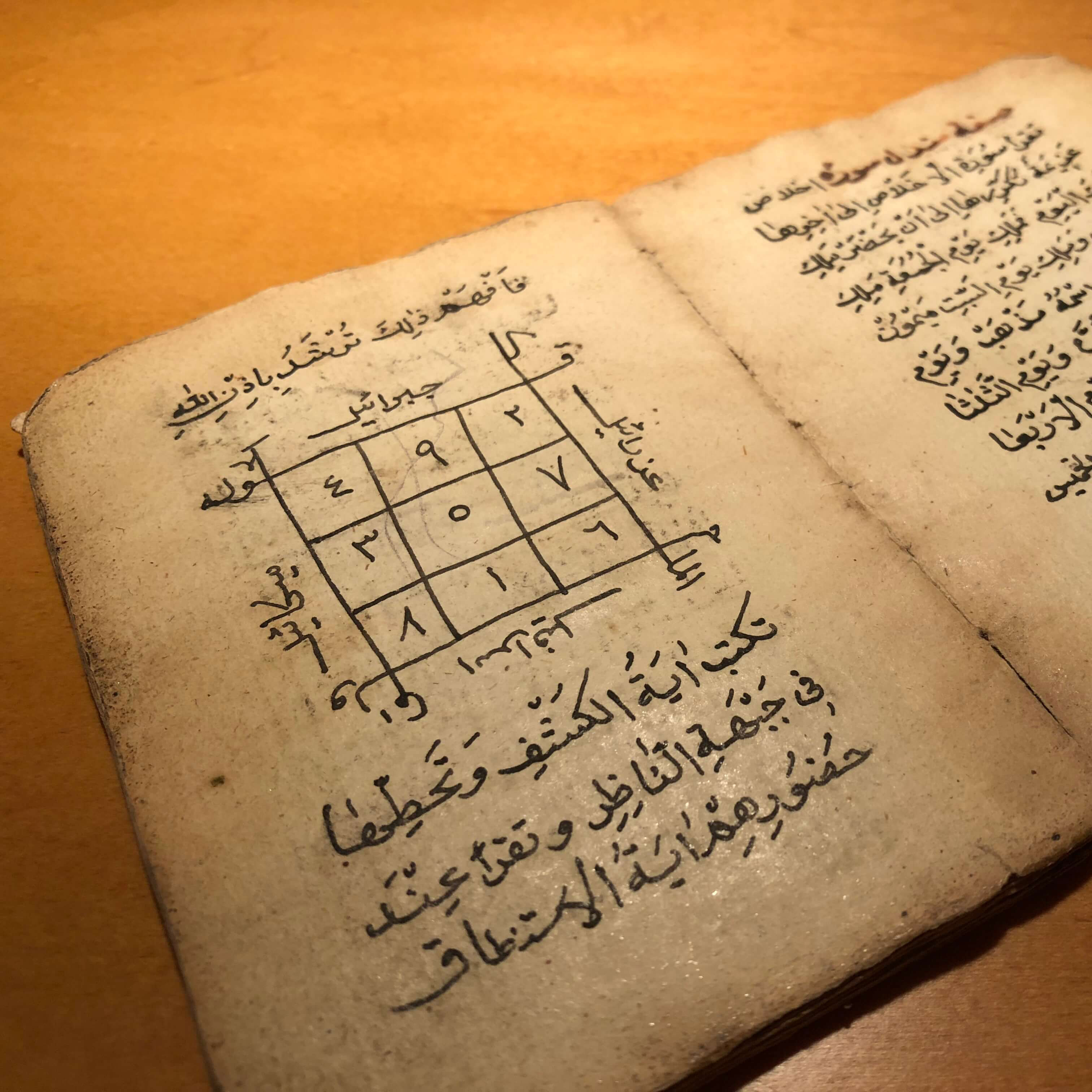
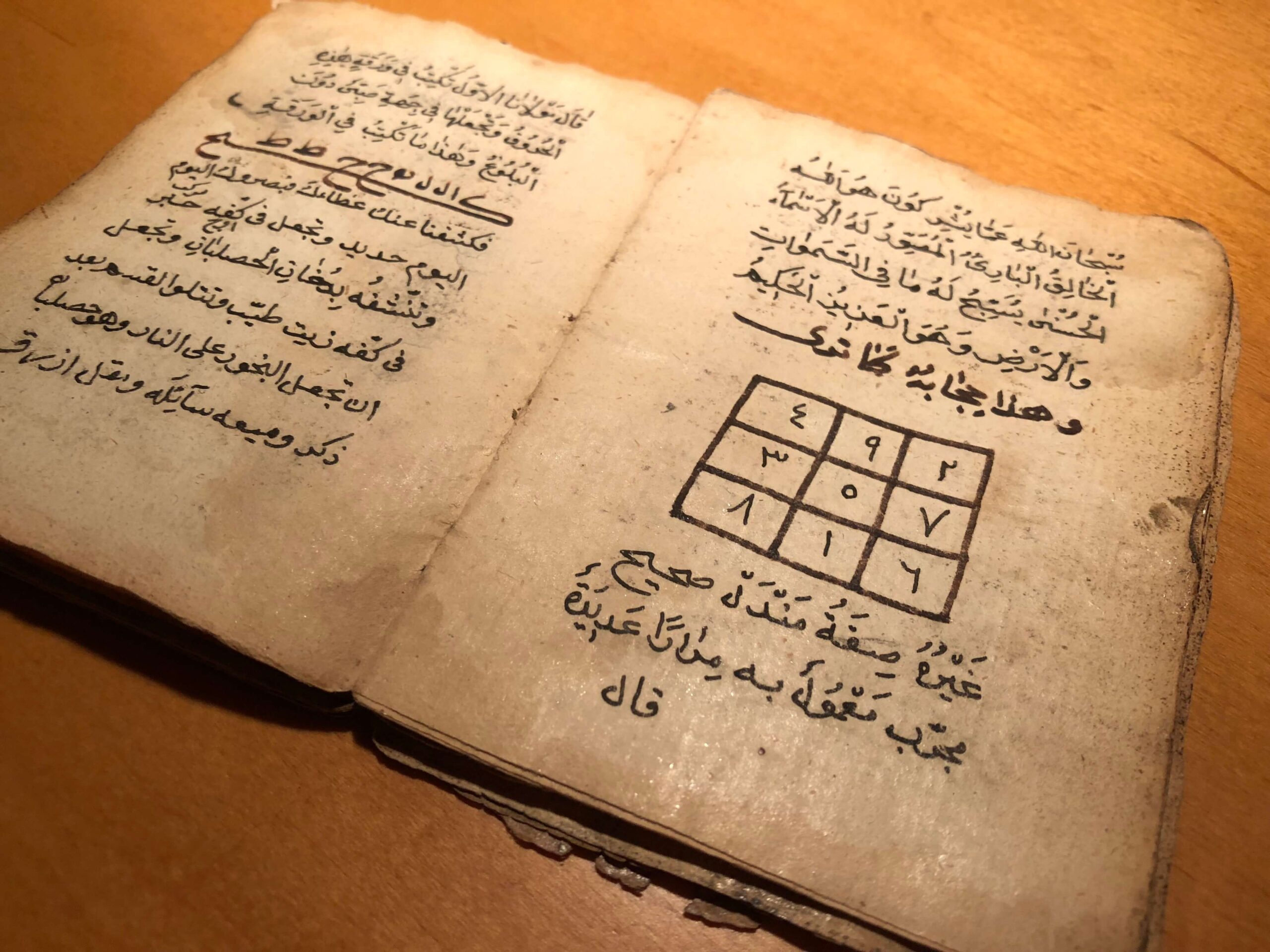
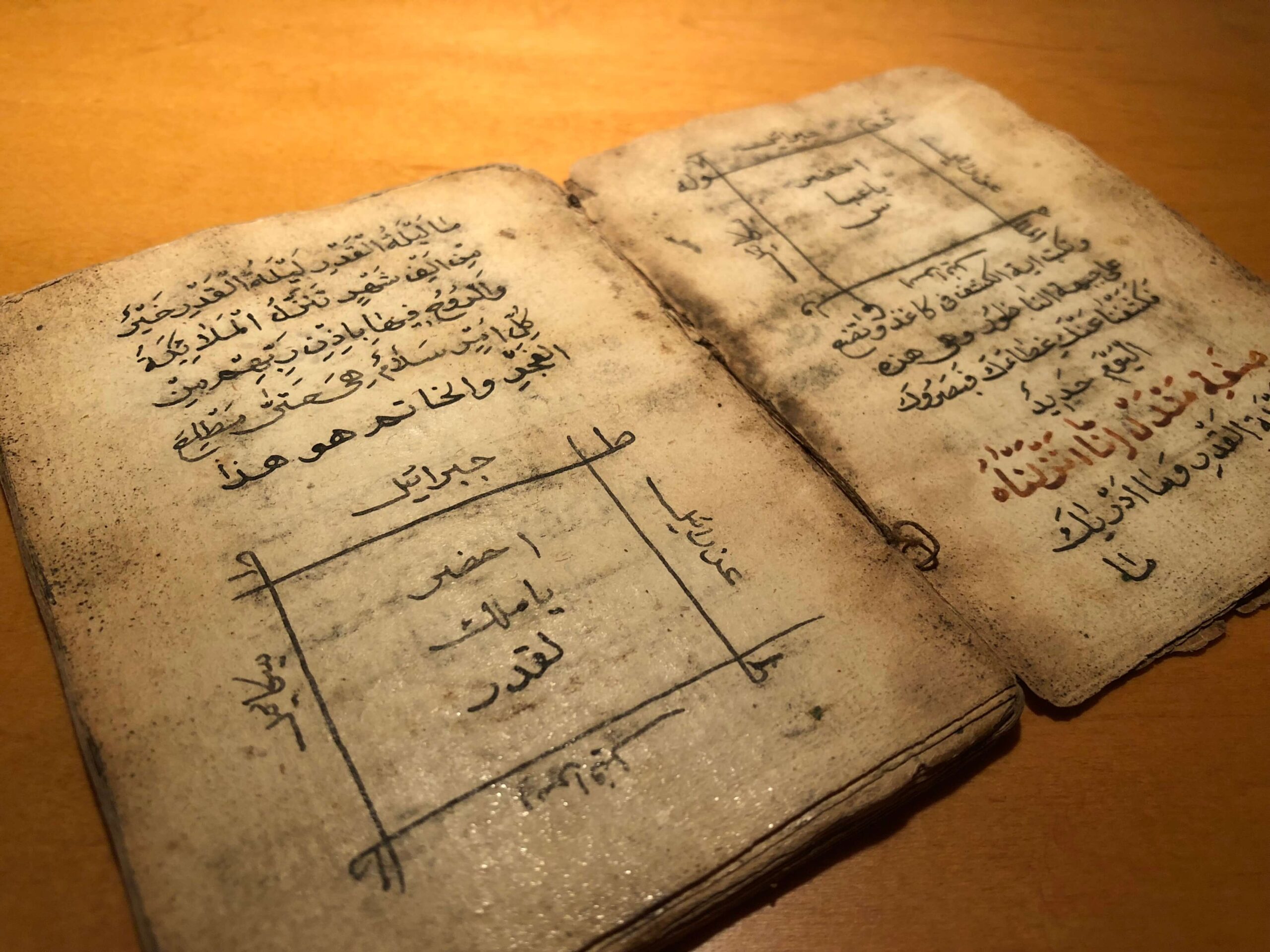
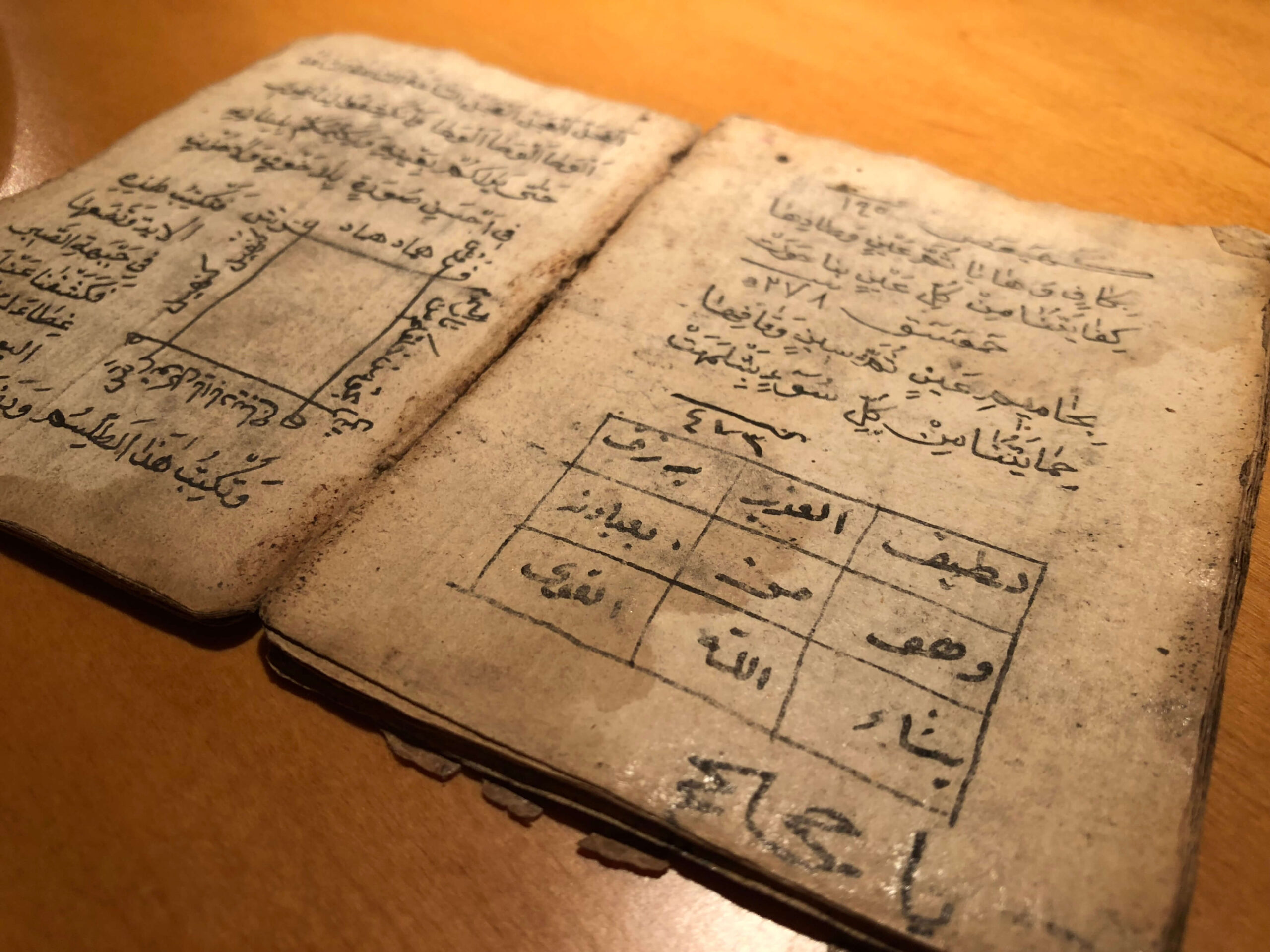
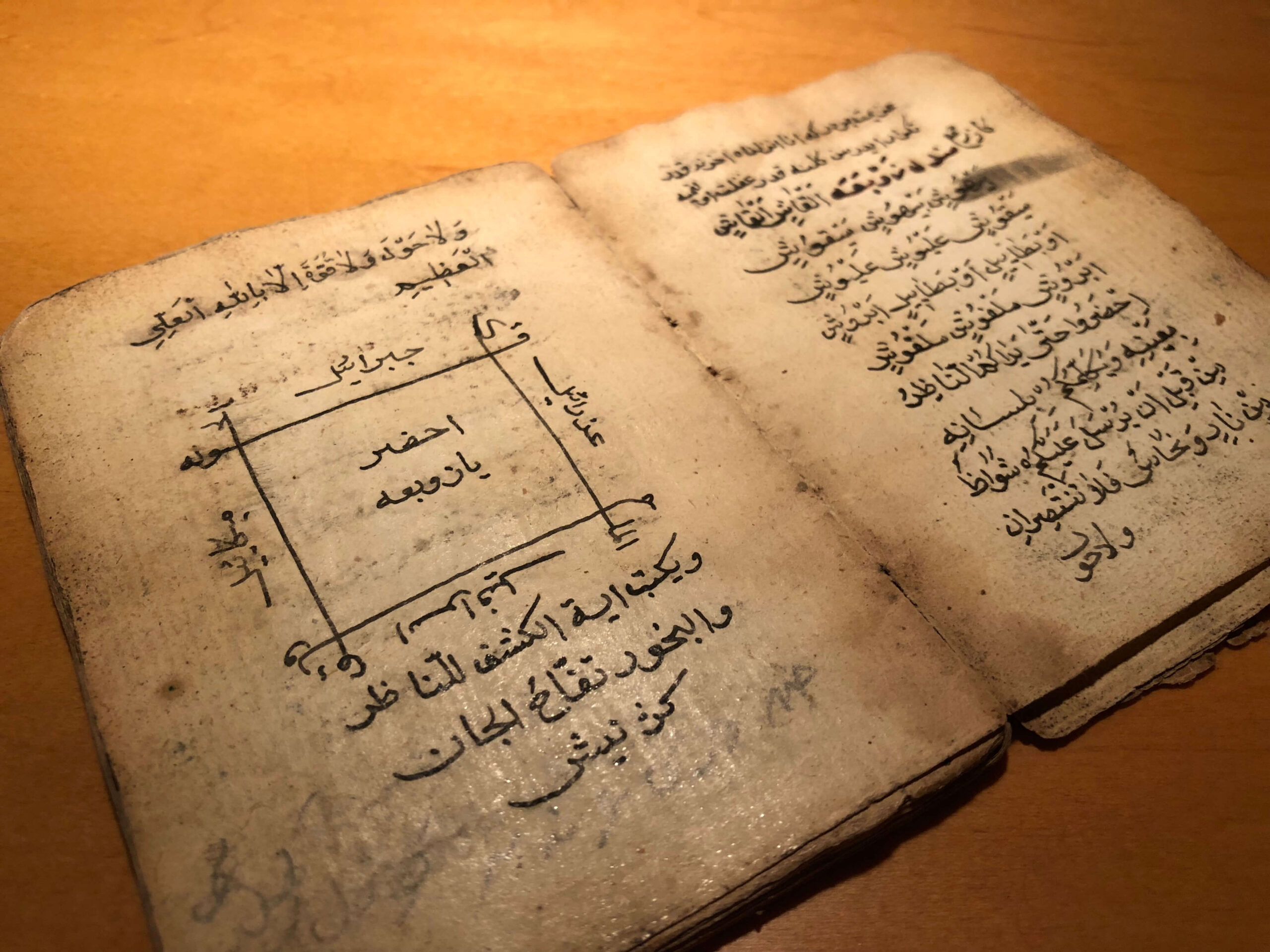
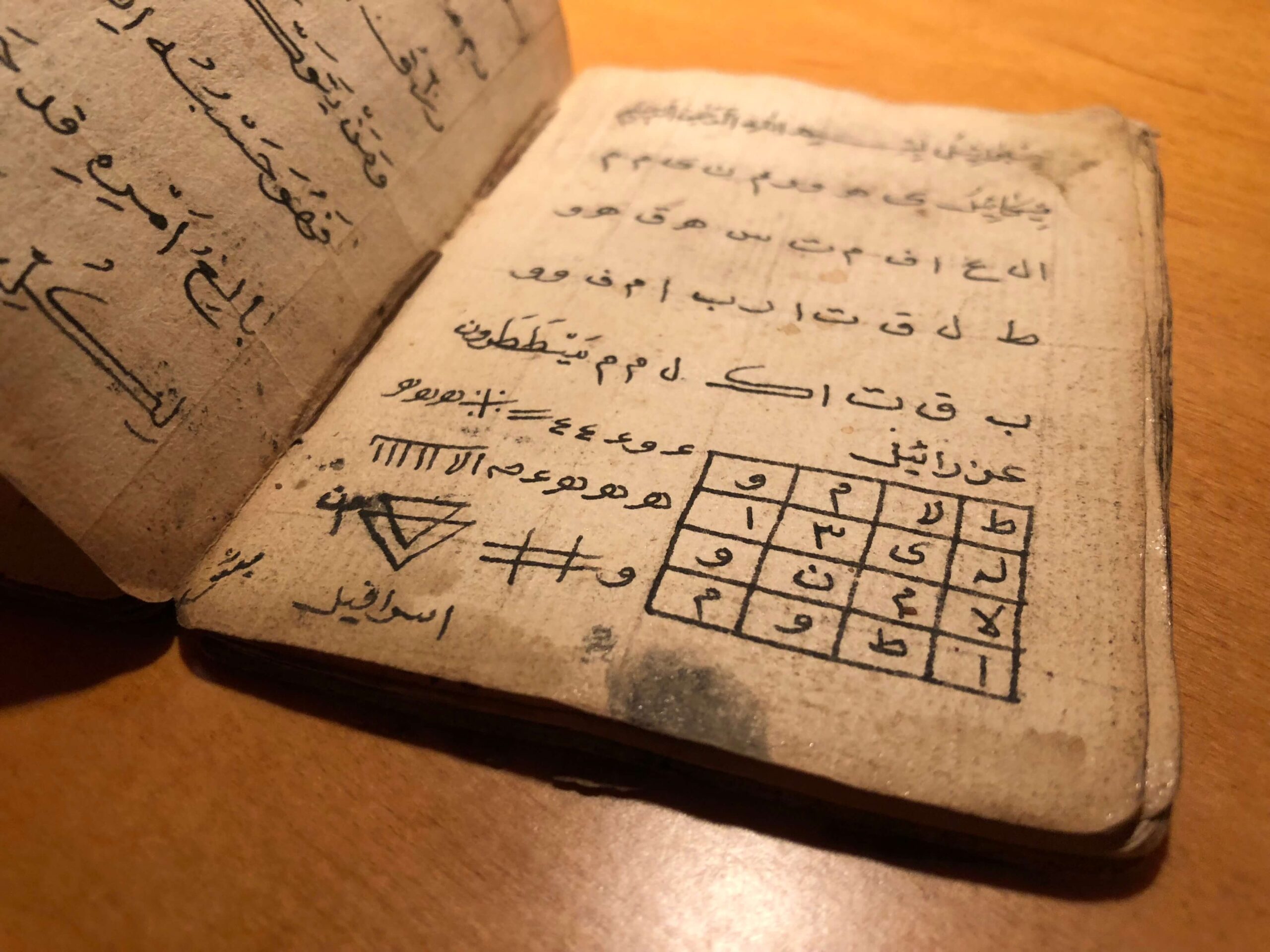
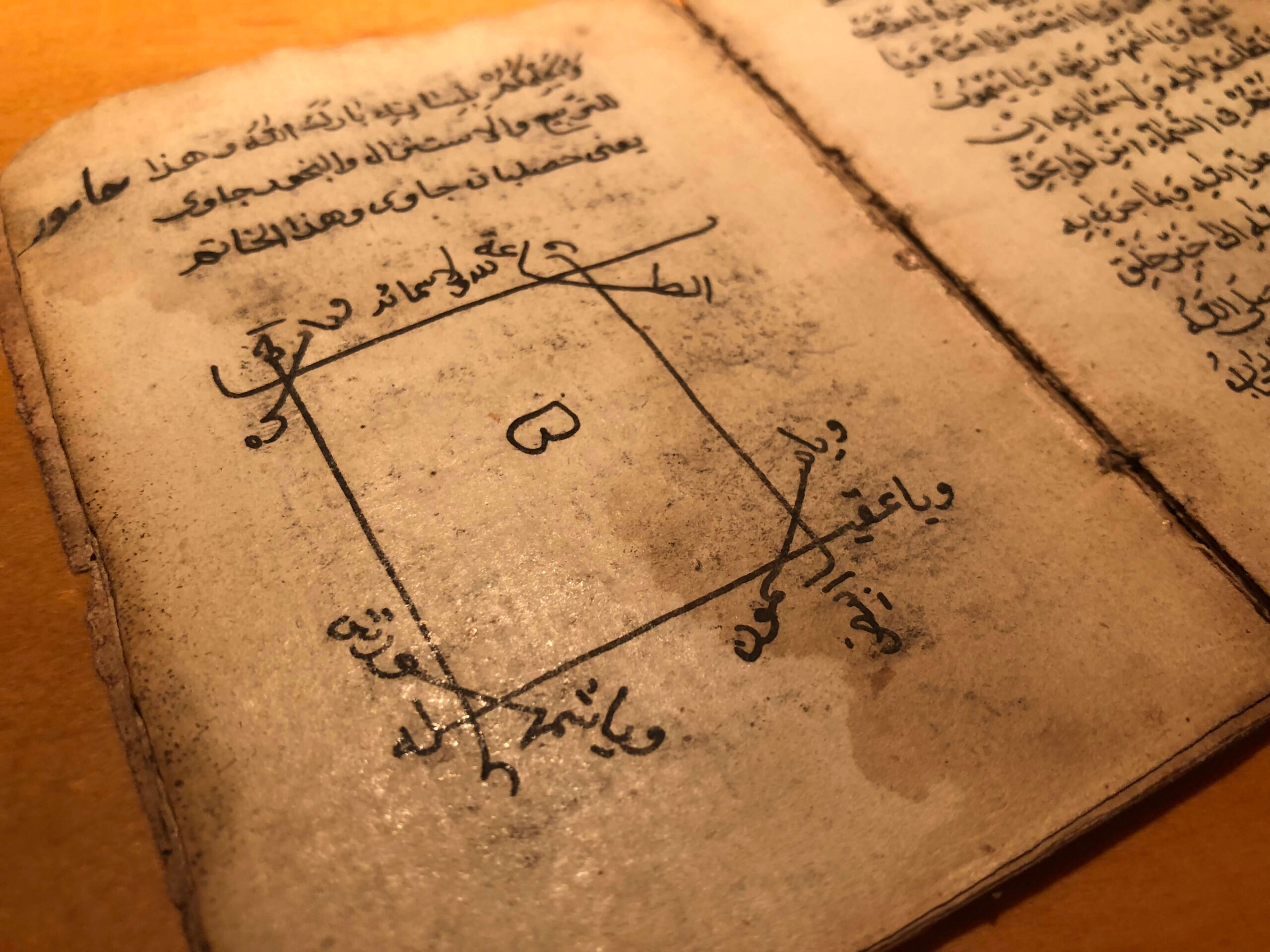
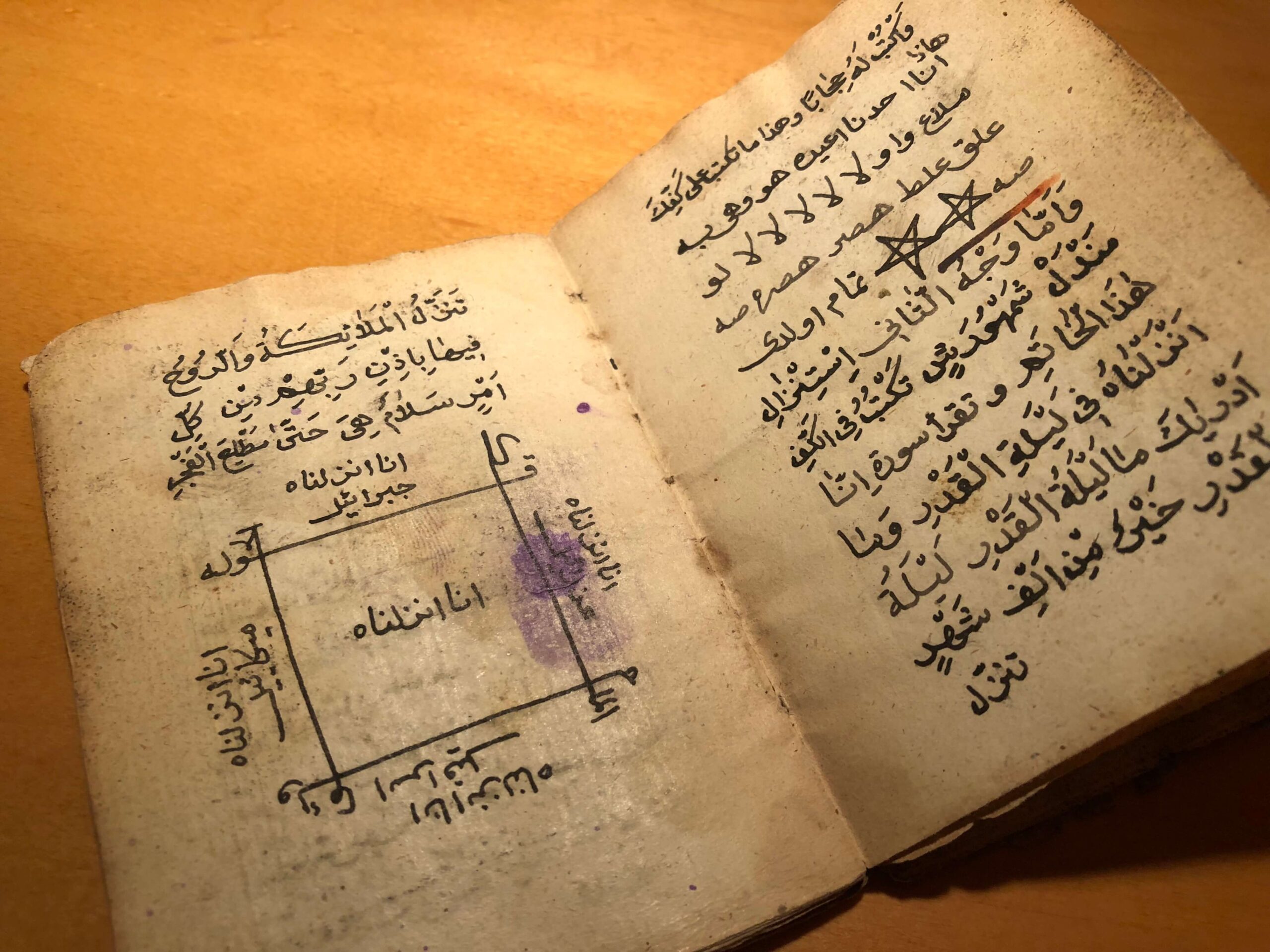
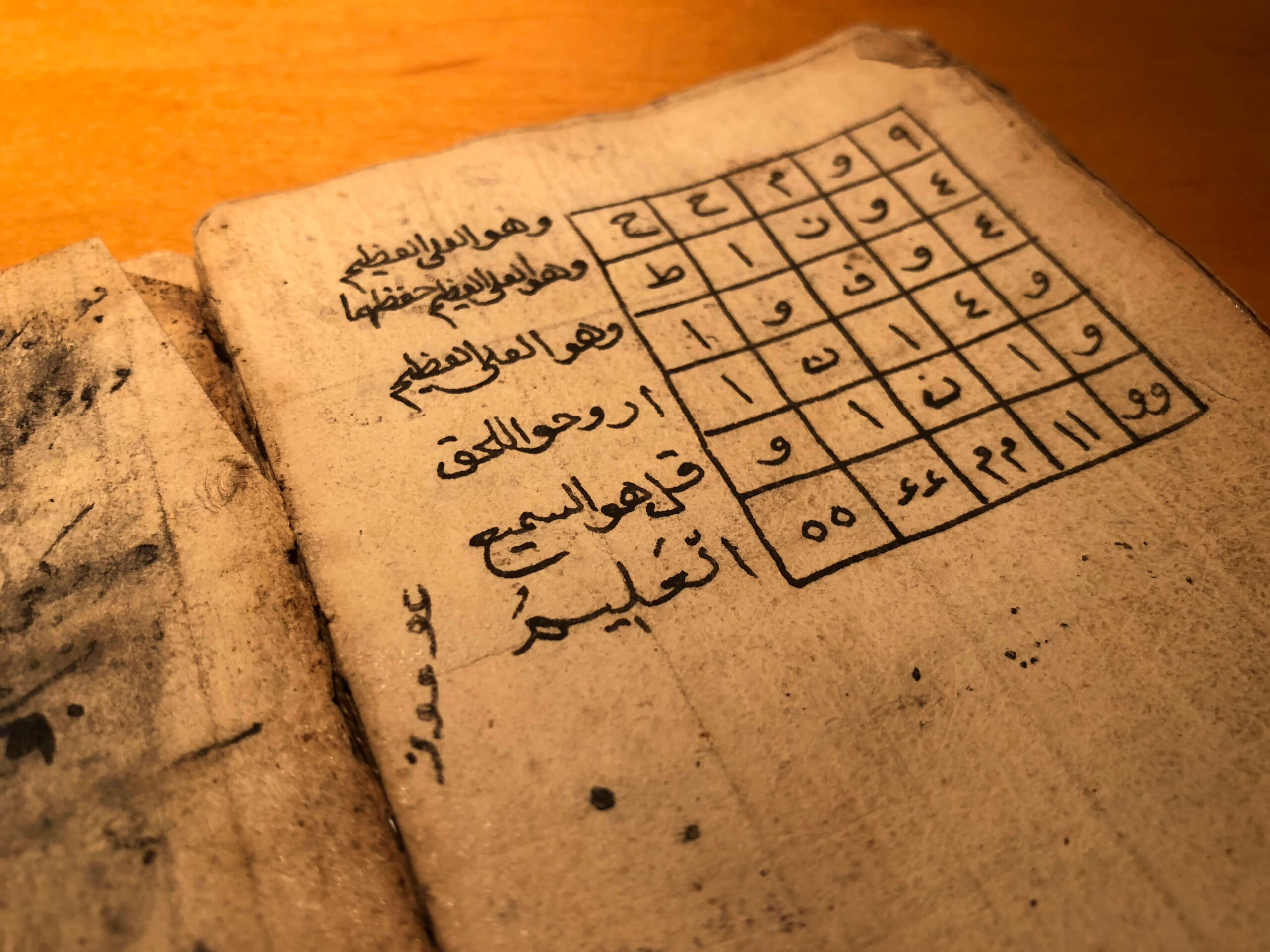
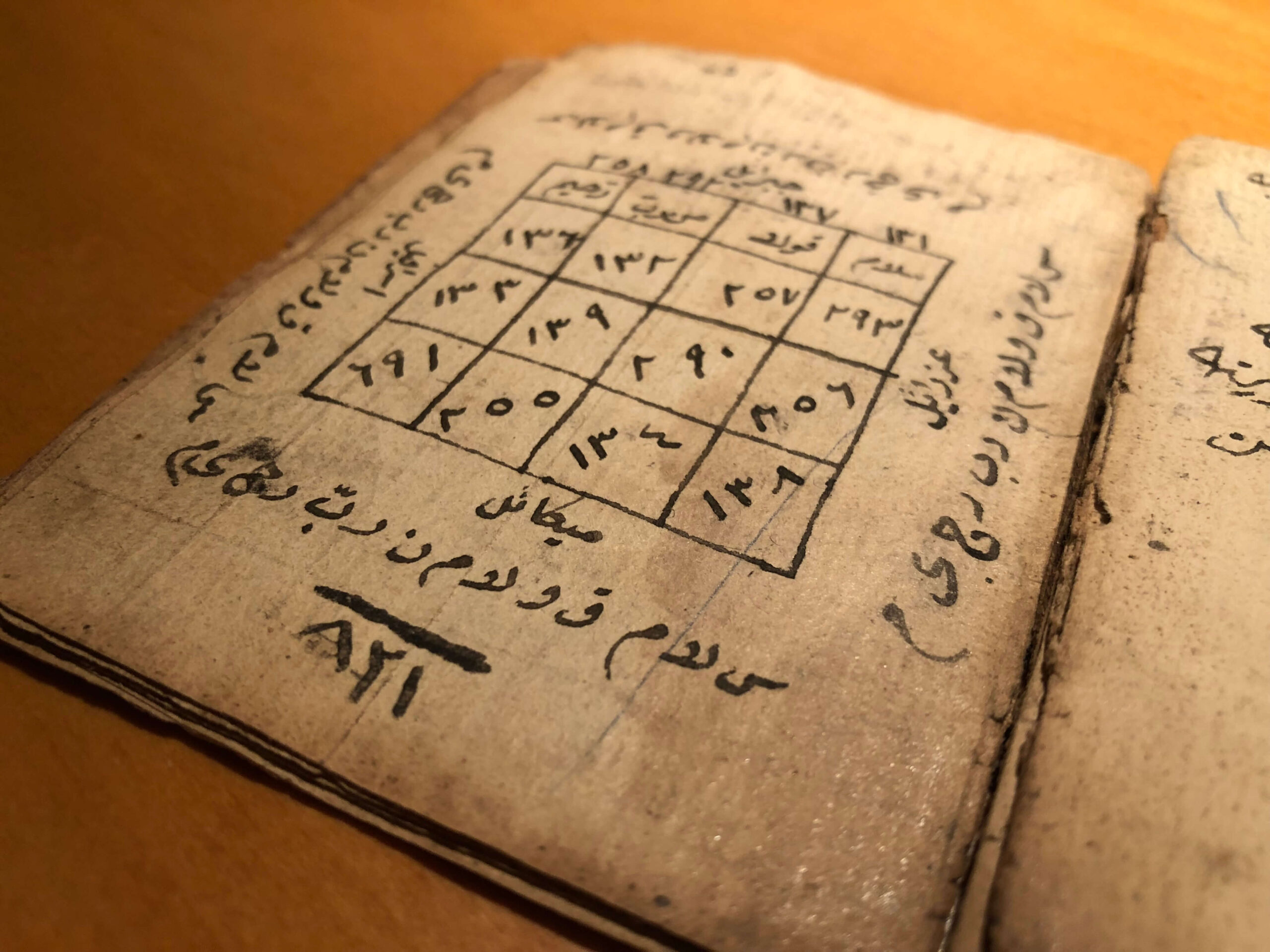
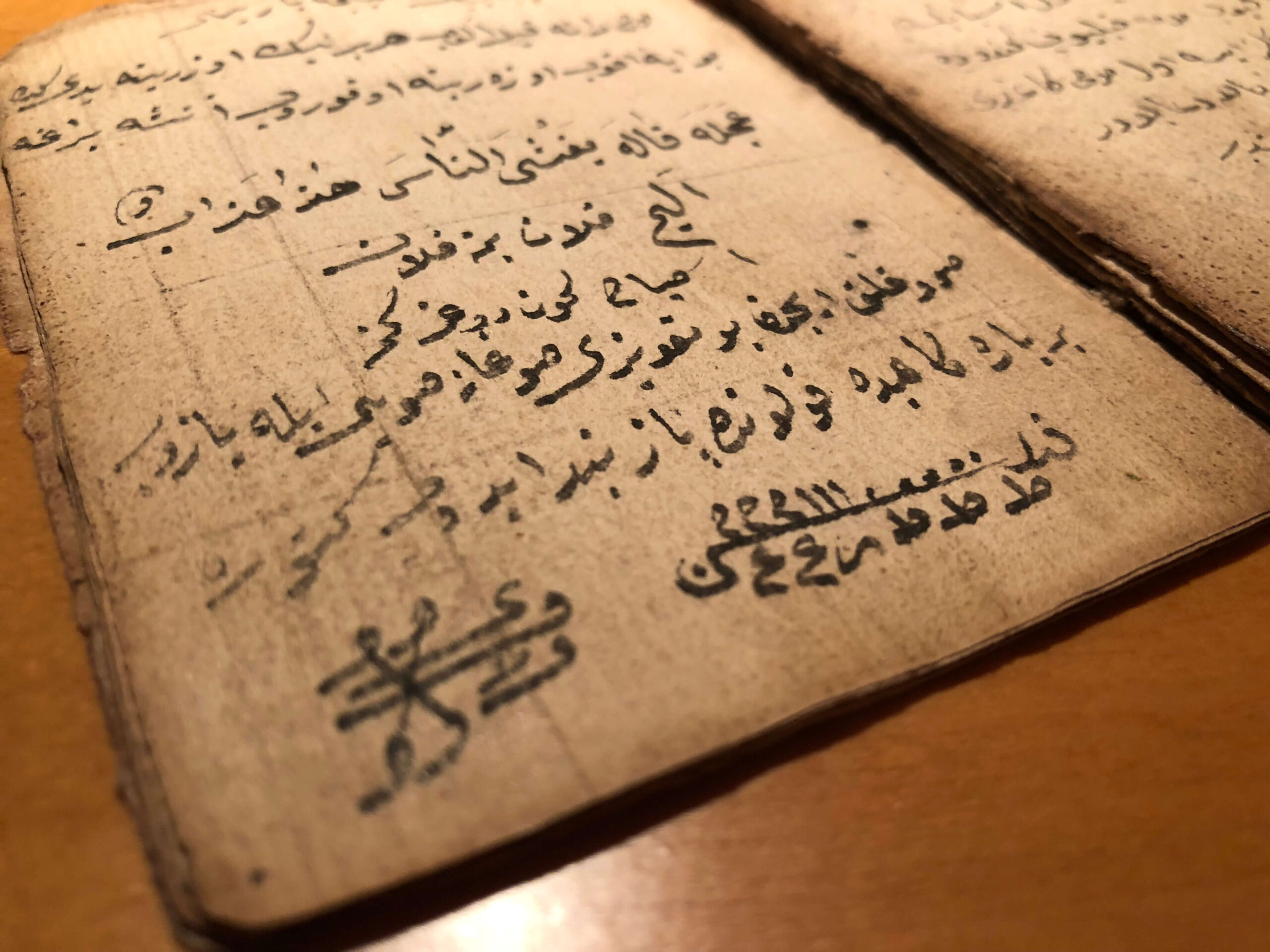
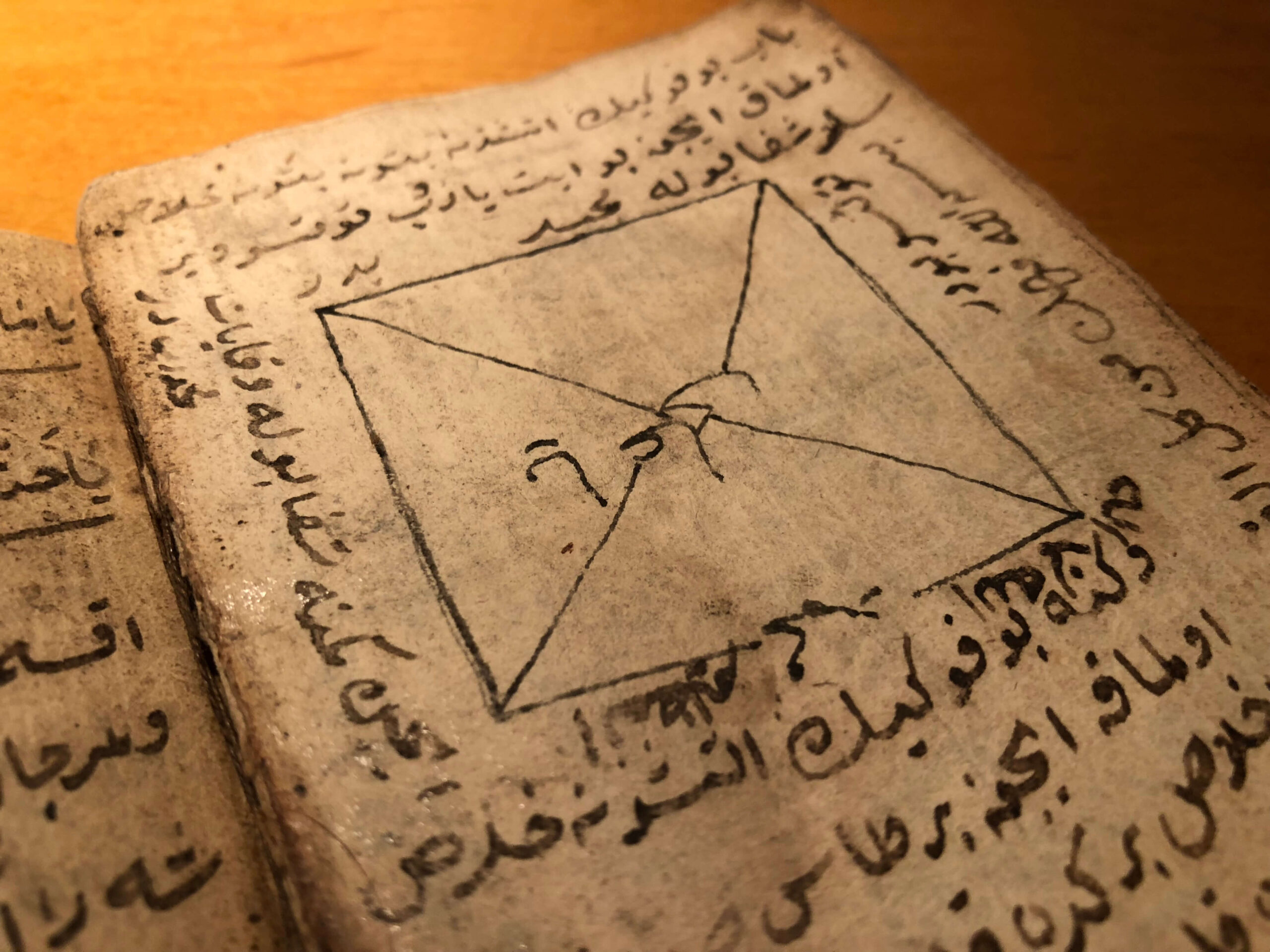
A rare 18th-century grimoire dealing almost exclusively with darb al-mandal (drawing the circle), also known as istinzāl arwāḥ (drawing-down the spirits), which is a distinct category of divination that seeks the aid of jinn. Includes conjurations and seals for numerous jinn kings and archangels. A working manuscript used by a practicing magician, not a theoretical copy. A true historical artifact that preserves the Islamicate tradition of evocationary scrying.
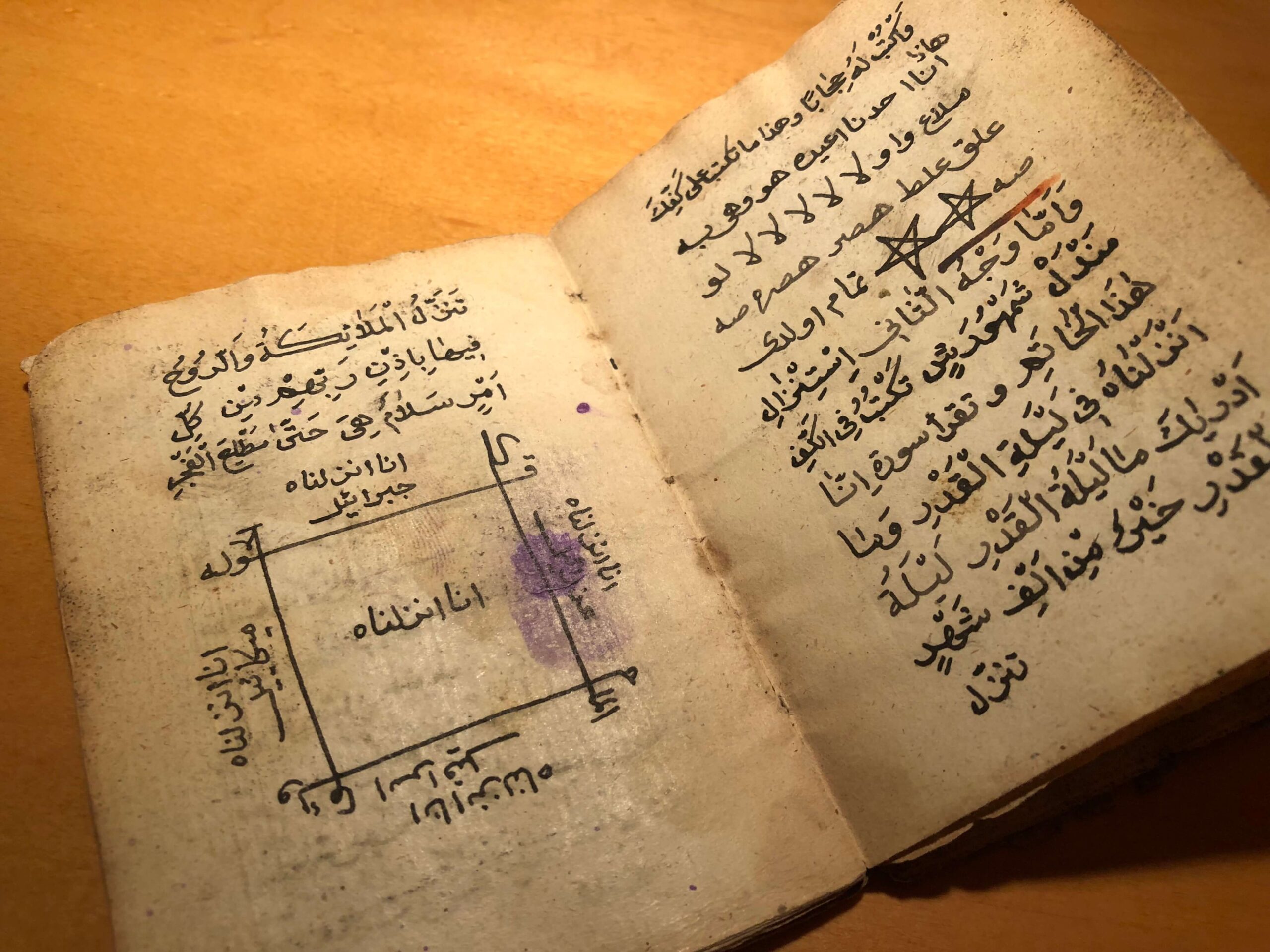
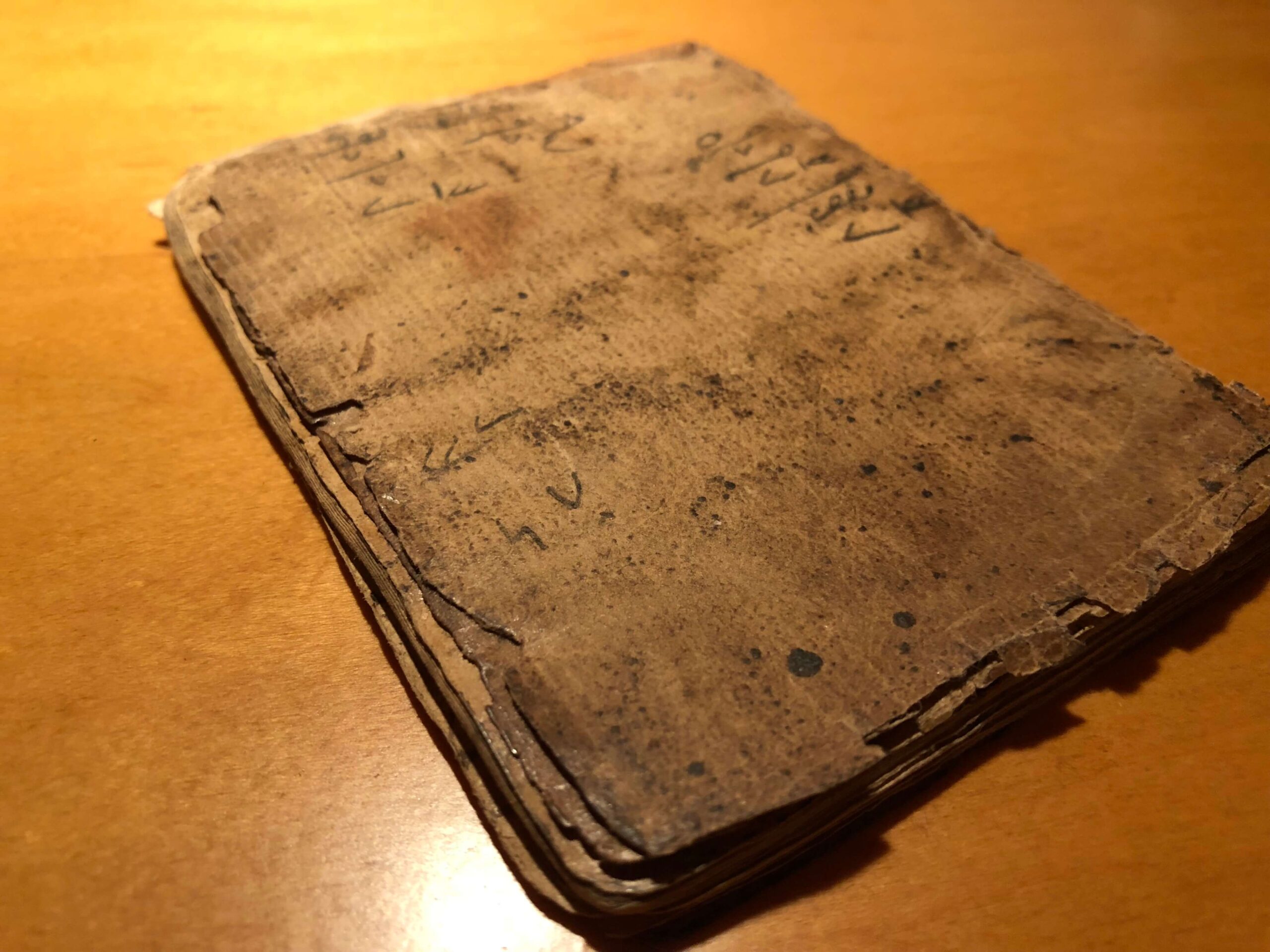
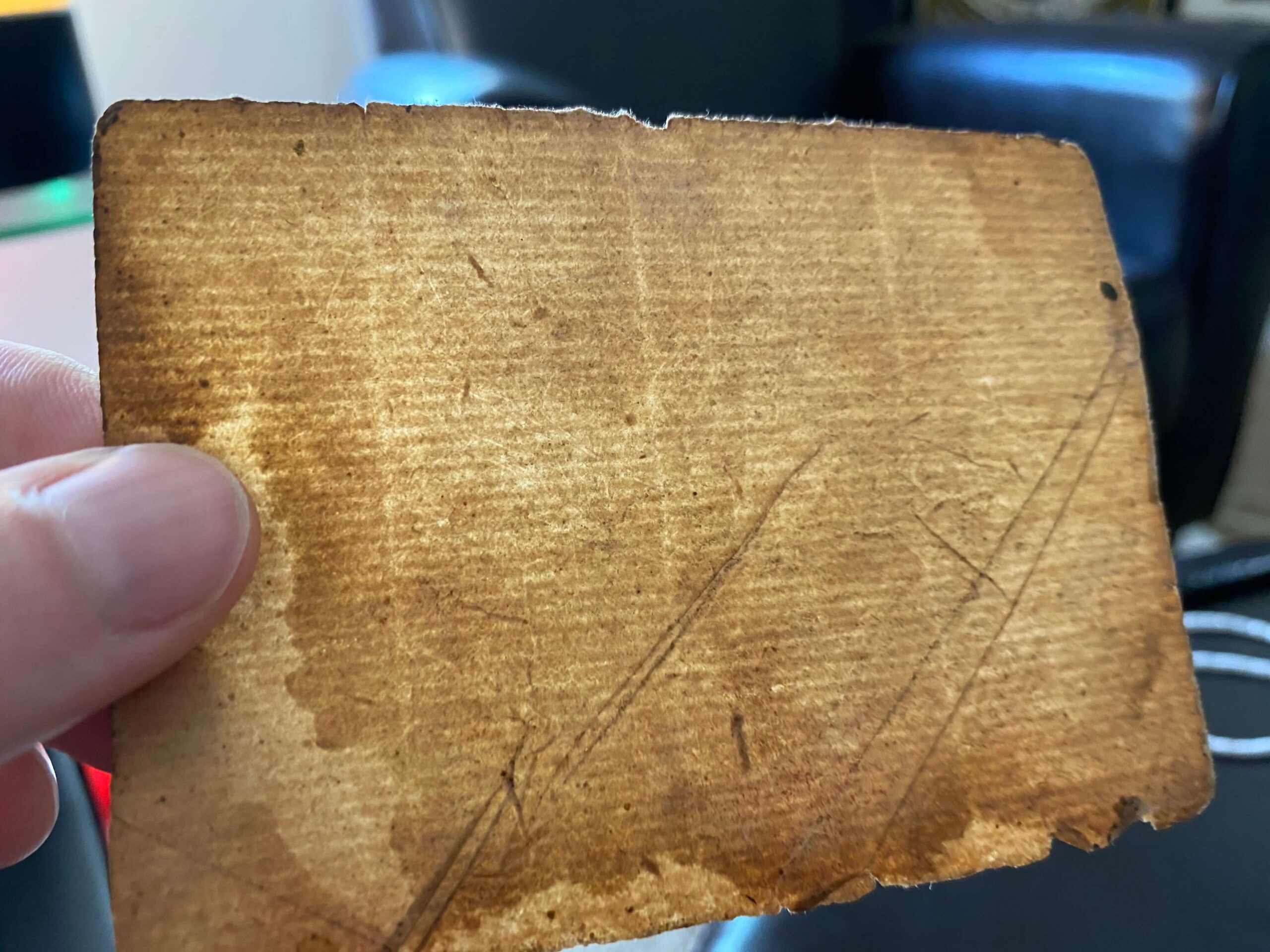
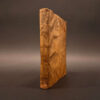
Written in fine Naskh script with finely drawn figures on handmade laid paper with visible chain lines, bound in paper wrappers using cord stitching, designed for personal portability and ritual use. The paper covers are detached as a result of centuries of handling, confirming its role as a personal grimoire carried on the body. Includes a purple ink stain over one of the figures, perhaps a side effect of the ritual use.
51 pages
Condition: some pages loose or detached from the text block. Appears COMPLETE
A rare 18th-century grimoire dealing exclusively with the mandal
In Muslim lands, al-mandal also serves as the term—or part of the nomenclature—for the tradition of evocationary scrying, often called istinzāl arwāḥ (drawing-down the spirits). This includes darb al-mandal (drawing the circle) and fath al-mandal (opening the mandal) which together serve as a distinct category of divination that seeks the aid of jinn. Often referred to as the “Ritual of Revealing,” it is especially popular for locating stolen goods or identifying thieves or murderers, though it can answer nearly any question—ranging from pregnancy and gender to the fate of the absent, profitability of transactions, and details about fugitives, rivals, and livestock.
The operation typically involves a prepubescent boy as seer (al-Bulūg), chosen for his purity and psychological neutrality. The Fātiḥ al-Mandal (Opener of the Mandal) writes verses of revelation (kashf)—usually Qur’anic—and affixes them to the boy’s forehead as a protective shield. A seal (khātam), often a four-sided maṇḍala invoking angelic names, is drawn on the seers left palm and black ink and oil are placed at its center for the boy to gaze into. For this reason, some call it, the “Mirror of Ink.” Incense is burned both to consecrate the space and help the seer reach trance. The jinn are summoned with persistent invocations until it appears, and the boy conveys what he sees.
The mandal can be accomplished through other mediums besides in a pool of ink – a new green bowl, a cup of water, a plain plate, an egg, blade of a sword, and Indian mirror are all common. It can also be opened directly to the Fātiḥ. Some grimoires include a ritual for opening it to yourself when a surrogate seer is not available.
Table of Contents:
- For Love
- Mandal of Abbas
- The Night of Power (Dream Revelation)
- Mandal of King Zawba’ah
- Conjuration of Surat Al Ikhlas (for the Jinn Kings of the Days of the Week)
- Jinn Eviction For Epilepsy
- Mandal of Shamhurash
- A True and Proven Mandal
- Mandal of the Seven Kings
- The Great Mandal
- Protection from the Evil Eye
- Mandal of Aba Dibaj
- Another Proven Mandal
- Mandal to Draw Down the Spirits
- 8 Misc. Jinn Conjurations
Excerpt (in English)
As Our Master (Mawlānā) first advised: Employee a prepubescent boy. Write the following letters and the Verses of Revelation on paper and attach to his forehead.
This is what you write on the paper:
Now we have removed from thee thy covering, and piercing is thy sight this day.
Pour pure olive oil mixed with ink over his hand, and fumigate it with frankincense. Place the frankincense incense on the fire and recite the conjuration. Frankincense is sufficient but for faster results, boil the Frankincense in the oil of African myrrh and spirits will be forced to appear that much faster.
[This is the conjuration:]ʾĀnīn · ʾĀnīn · ʿAbarsūn · ʿAbarsūn · ʿĀṣūn · ʿĀṣūn · Ḥalsūn · Ḥalsūn · Qayyūm · Qayyūm · Dayyūm · Dayyūm. Originator of the heavens and the earth, Full of Majesty and Splendor. Maytatron, Maytatron, answer my call and come down servants of these names and appear before this seer so that he may see you with his eyes · ʾĀyānā · Maʿyānā · and address you with his tongue—Tongue of tongues, Answer! In the power of those names and your obedience to them, in the name of Allah WHO manifested Himself to the mountain, He leveled it to dust, and Moses fell down unconscious. Answer my call in the name of Allah WHO said unto the earth, “Come, willingly or unwillingly.” They said, “We come willingly.” It is from Solomon, and it is, “In the Name of God, the Gracious, the Merciful.” Do not defy me and come to me submissively! Surrendering, Hurry! Now! Quickly! Immediately!
If the seer says that he saw a man dressed in white, tell him to ask that man to sweep the floor, sprinkle water, and line up seven chairs. Then he asks him to pitch a tent over each of the chairs. He invites all the Jinn tribes to enter the Mandal and instructs each tribe to sit under the chair of their king. You ask each tribe to fulfill your desire by the hand of their King. Should it be their day, ask the king what you want and let him go by reciting the following.
[This is the dismissal:]Go! As you came, obeying in Allah and His Prophet. Go in peace. Bakhin · Bakhin! Go! May Allah bless you. Go! With gratitude in the name of Kāf · Hāʾ · Yāʾ · ʿAyn · Ṣād. And in the name of Hāʾ · Mīm · ʿAyn · Sīn · Qāf · Wāw. There is no power nor strength save in Allah!
[Translation © Thomas Arcaine, 2026]——
This represents a museum-level artifact of the Islamicate esoteric practice, ideal for collectors of occult manuscripts, scholars of Solomonic tradition, and practitioners of ceremonial magic.
Reviews
There are no reviews yet.